
Patek Philippe Nautilus 5711/1R Box & Papers Basic Info Brand...
Read MoreA skeleton watch is built around revelation rather than concealment. Instead of covering the movement with a solid dial, the watchmaker removes non–essential material from the caliber so that bridges, wheels, escapement components, and power delivery can be seen directly. This process demands far more than aesthetic cutting. Every surface that remains visible must be reworked, finished, and structurally balanced so the movement retains stability while exposing its internal architecture. In the best examples, the result is not simply transparency, but a controlled mechanical composition where engineering and finishing are equally important.
What separates a serious skeleton watch from a partially open dial is discipline. The strongest pieces preserve legibility, maintain movement rigidity, and use finishing techniques such as beveling, satin brushing, polishing, or NAC treatment to give the caliber visual depth. In high horology, skeletonisation often becomes a test of manufacturing capability because the watch must continue to perform accurately while revealing the very parts most brands normally hide. That is why skeleton watches remain one of the clearest demonstrations of mechanical confidence in contemporary watchmaking.
The 10 Best Skeleton Watches
1. Audemars Piguet Royal Oak Double Balance Wheel Openworked
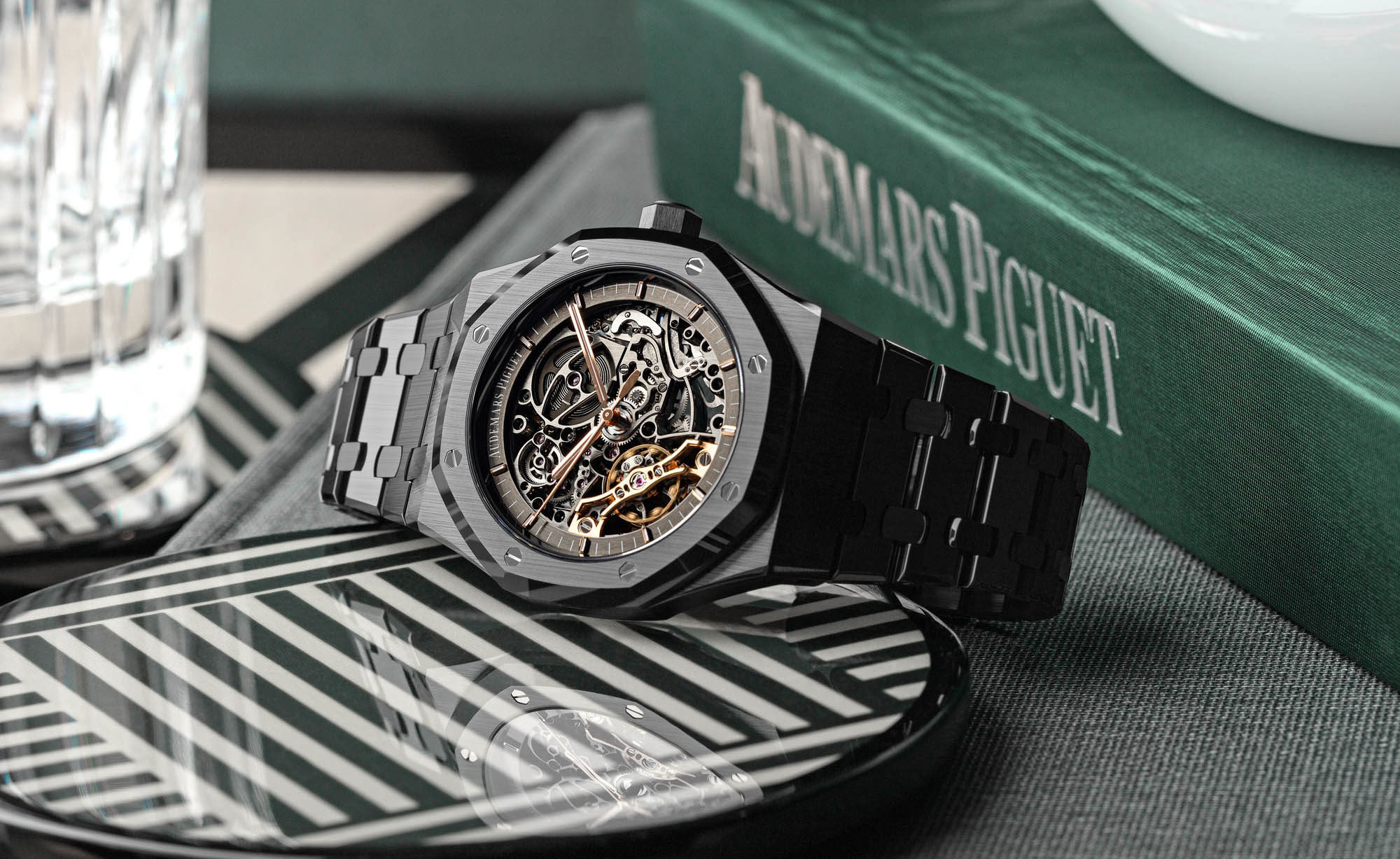
This 41 mm Royal Oak is one of the best known modern skeleton watches because it combines the collection‘s integrated sports case with a fully openworked caliber and Audemars Piguet’s double balance-wheel system. The stainless steel reference 15407ST measures 9.9 mm thick, is water resistant to 50 meters, and uses the selfwinding caliber 3132. Its open slate-grey architecture preserves the sharp geometry of the Royal Oak while placing the regulating system at the center of the watch’s identity.
2. Cartier Santos de Cartier Skeleton
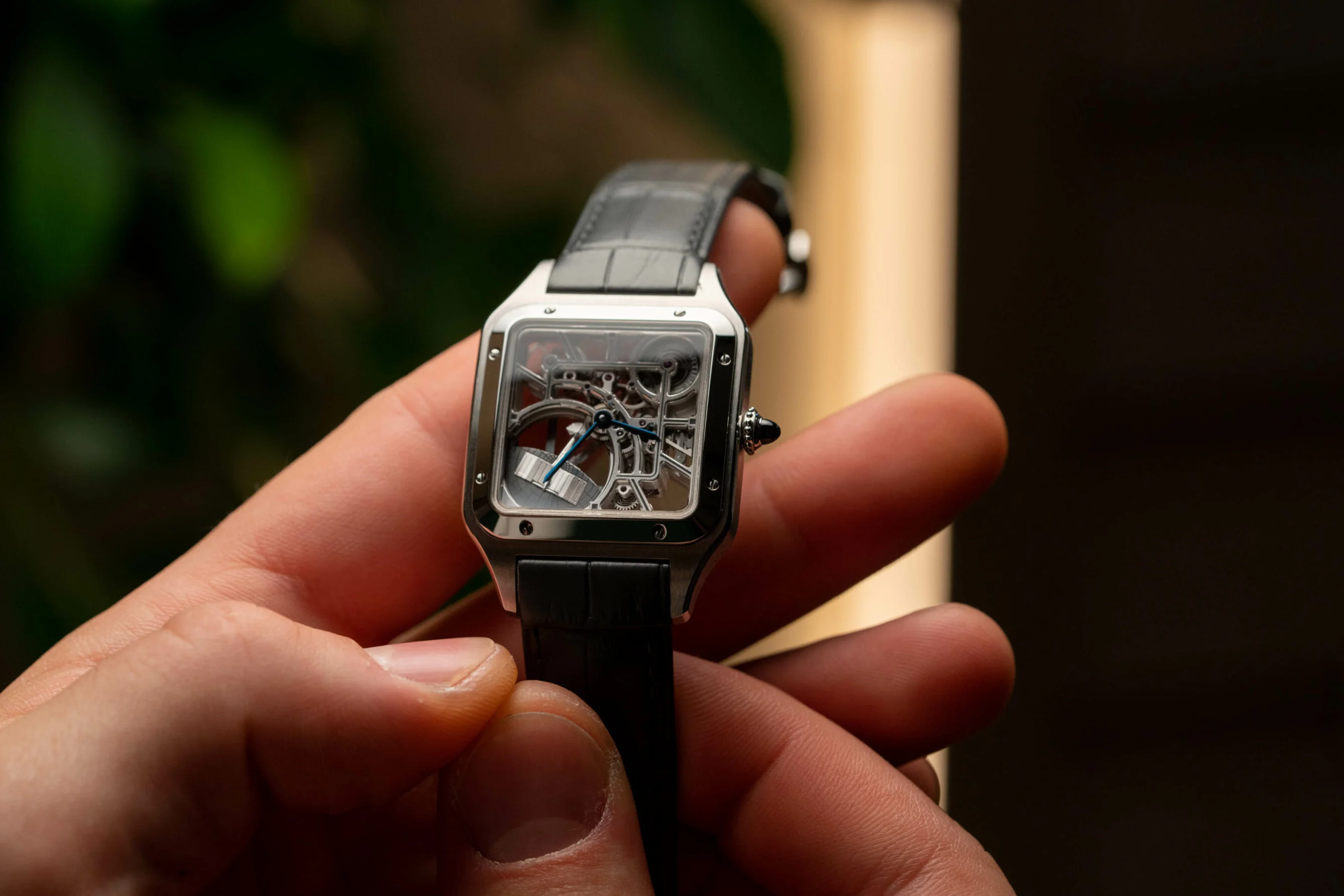
Cartier approaches skeletonisation differently by turning the Roman numerals into structural bridges, making the movement and the display inseparable. The steel Santos Skeleton measures 47.5 mm by 39.7 mm, has a thickness of 9.08 mm, is water resistant to 100 meters, and uses a manual-winding mechanical movement. It is one of the clearest examples of design-led skeleton watchmaking because the architecture is immediately recognizable as Cartier before the case shape is even considered.
3. Hublot Big Bang Tourbillon Automatic Sapphire
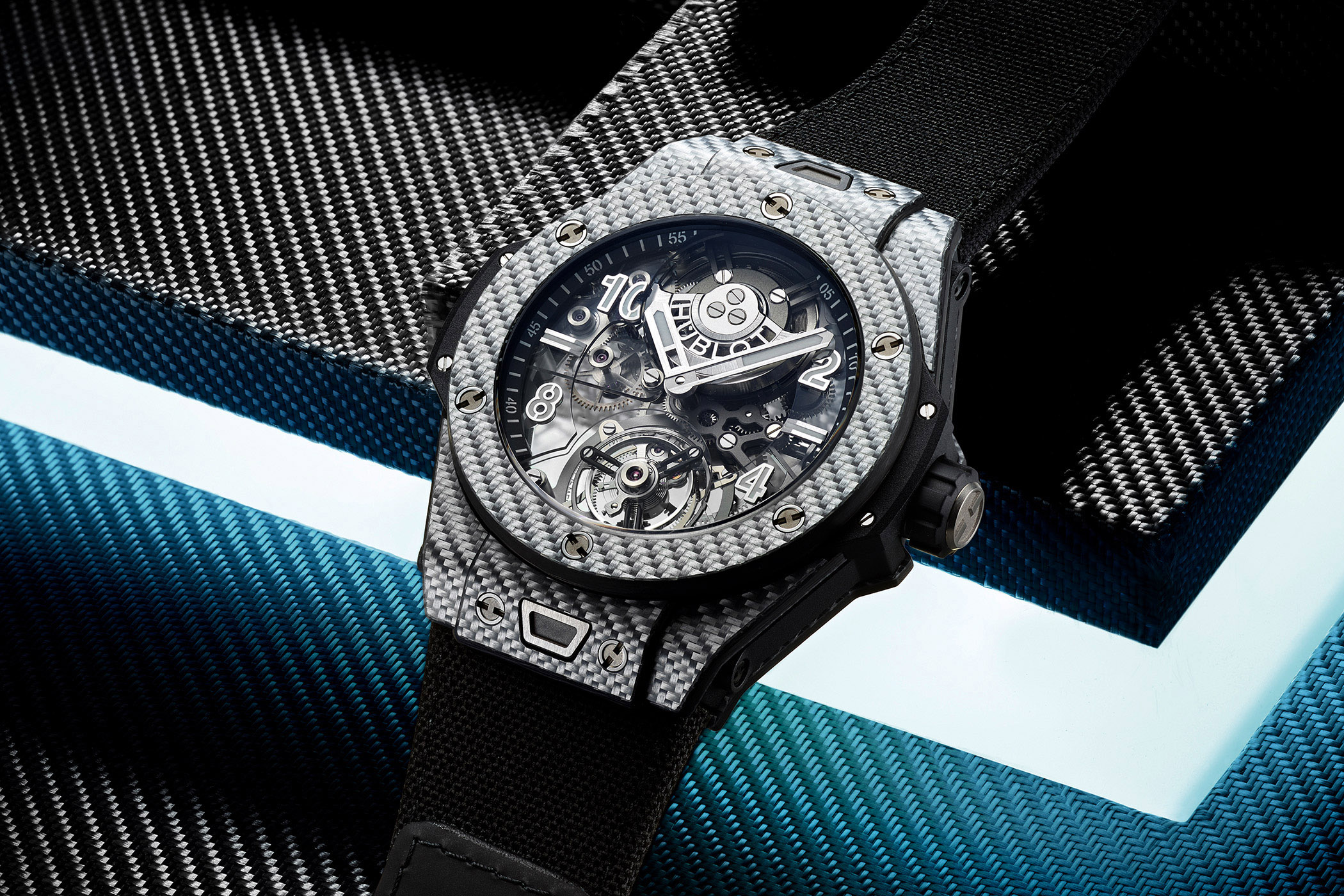
In this watch, transparency becomes the entire design language. The 44 mm case and bezel are cut from polished black sapphire crystal, the dial is also sapphire, and the movement is presented without visual obstruction. Hublot lists 30 meters of water resistance, anti-reflective sapphire crystal, and a fully exposed construction that gives the automatic tourbillon caliber maximum visual presence. The strength of this model lies in how case material and movement visibility reinforce each other rather than competing for attention.
4. Zenith DEFY Skyline Skeleton
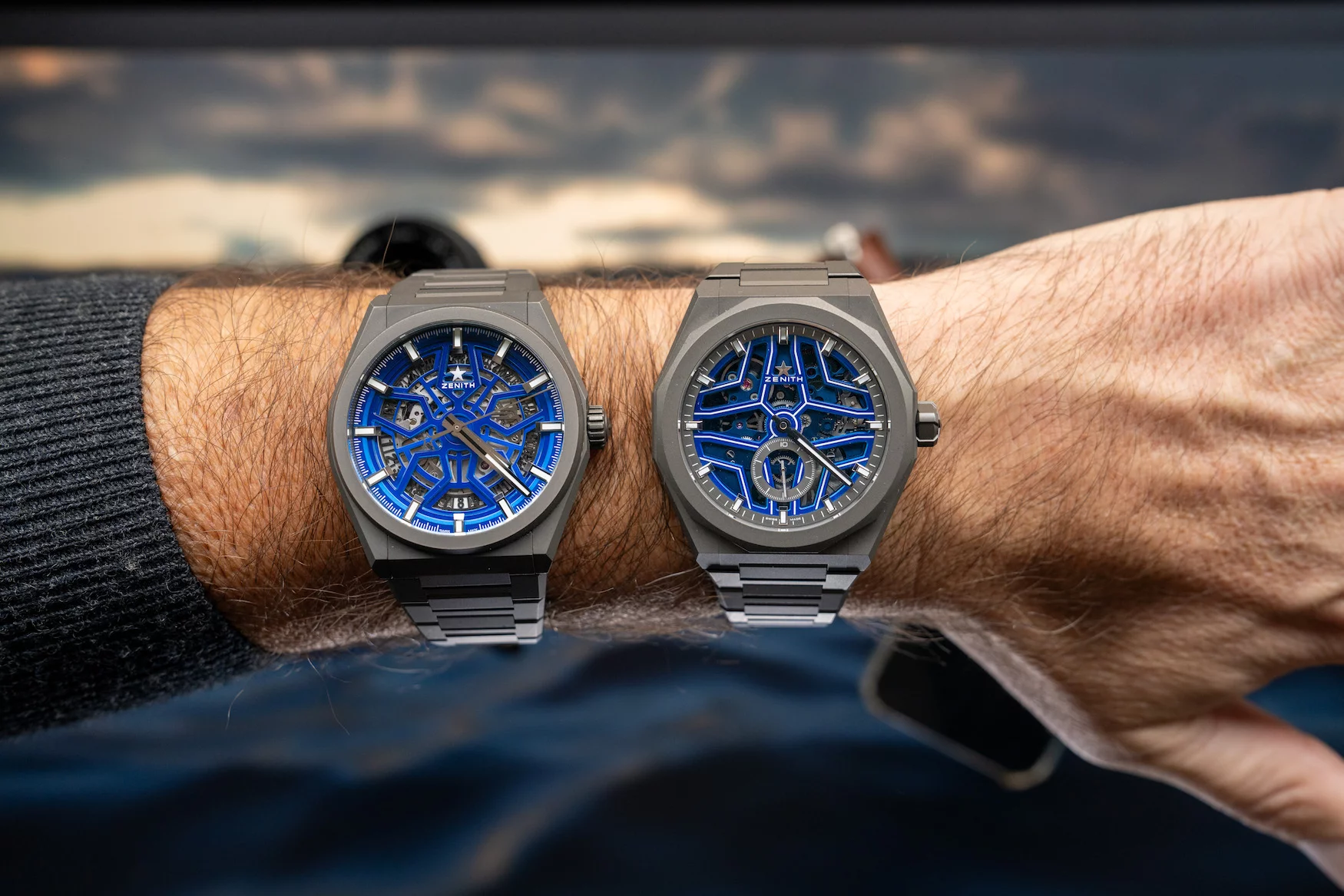
Zenith gives the skeleton watch a more contemporary sports profile with the DEFY Skyline Skeleton. The open dial is built around an openworked version of the El Primero 3620 SK, and Zenith highlights that it is the first and only openworked watch in the collection to feature the brand’s one-tenth-of-a-second indication driven directly from the escapement. It is available in steel or black ceramic, keeps the integrated sports format intact, and preserves strong legibility despite the exposed caliber.
5. Vacheron Constantin Overseas Tourbillon Skeleton
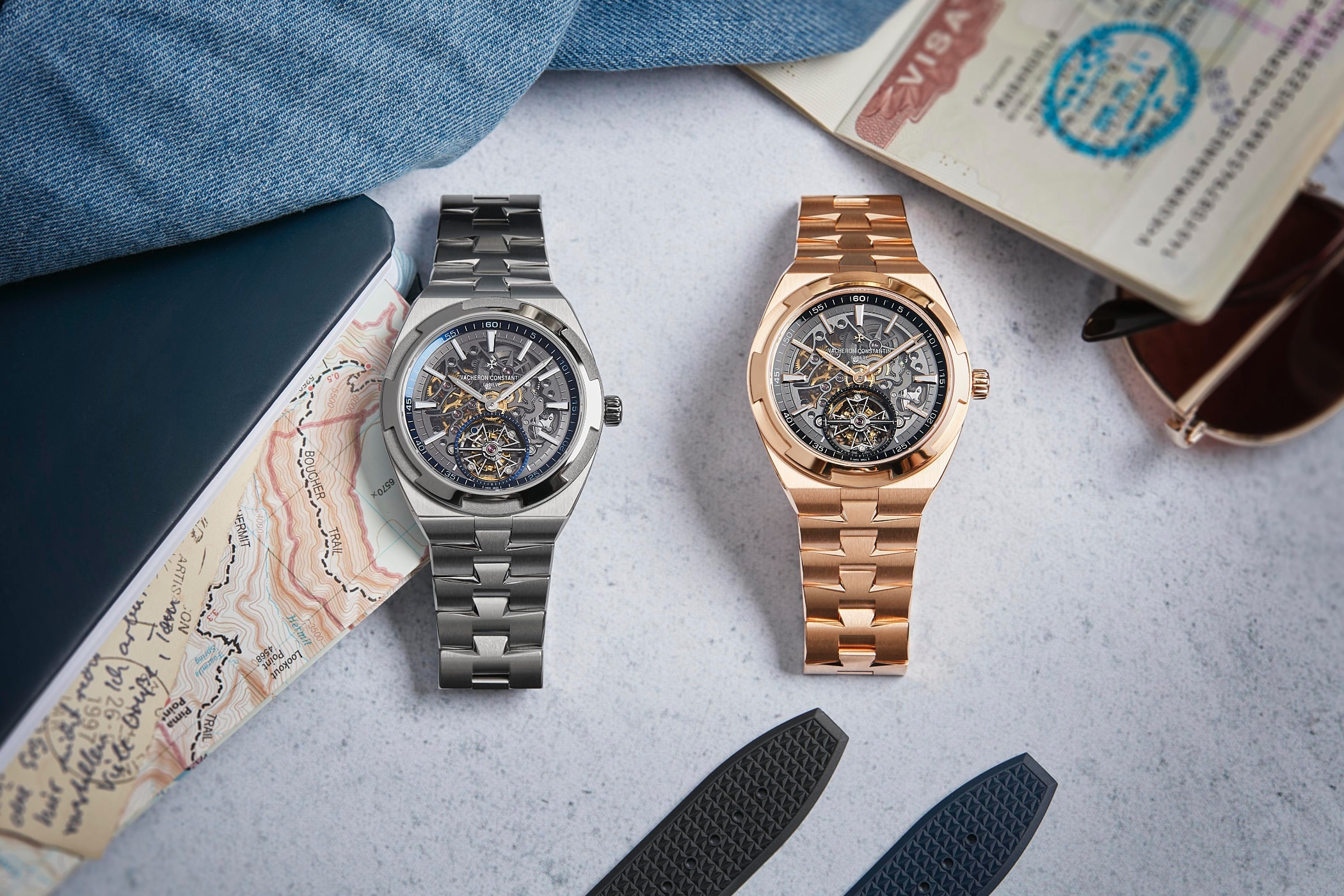
Vacheron Constantin’s titanium Overseas Tourbillon Skeleton demonstrates how openworked watchmaking can remain thin, refined, and technically serious at the same time. The brand specifies a 42.5 mm Grade 5 titanium case and an ultra-slim skeleton movement only 5.65 mm thick, with a peripheral 18K gold winding weight and a power reserve of more than three days. The open architecture is combined with a Maltese cross-inspired tourbillon cage, which gives the watch both technical depth and unmistakable brand identity.
6. Piaget Polo Skeleton
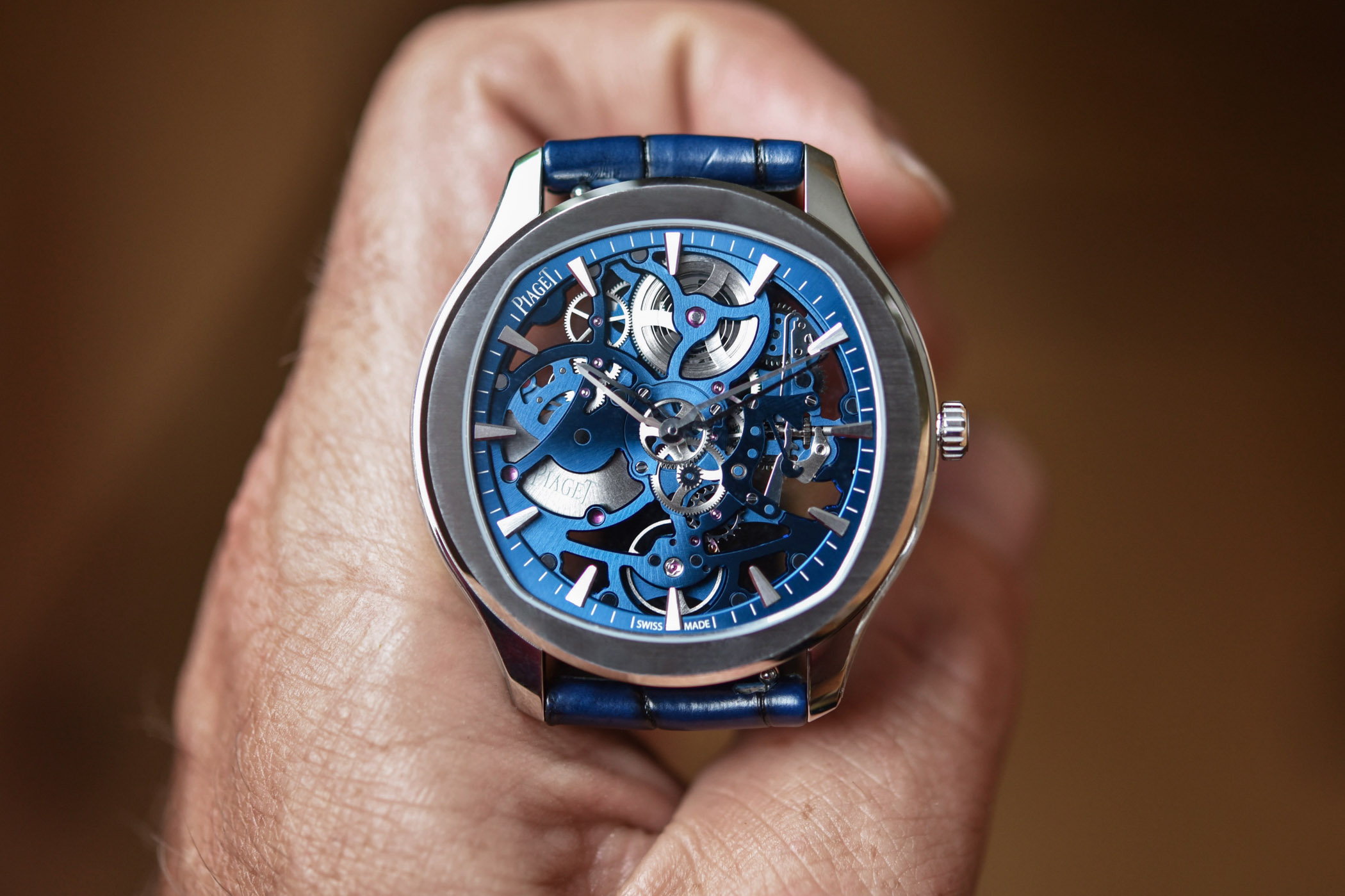
Piaget’s Polo Skeleton is one of the strongest examples of a refined luxury sports skeleton watch. Piaget explains that the watch was developed around an all-new self-winding skeleton movement, the 1200S1, which uses an off-center micro-rotor engraved with the Piaget coat of arms. Secondary technical reporting on the official launch notes a 42 mm case and a very slim 6.5 mm profile, reinforcing Piaget’s long-standing expertise in thin movement construction. The appeal here comes from the combination of visual openness and elegant restraint rather than aggressive exposure.
7. Bulgari Octo Finissimo Skeleton 8 Days
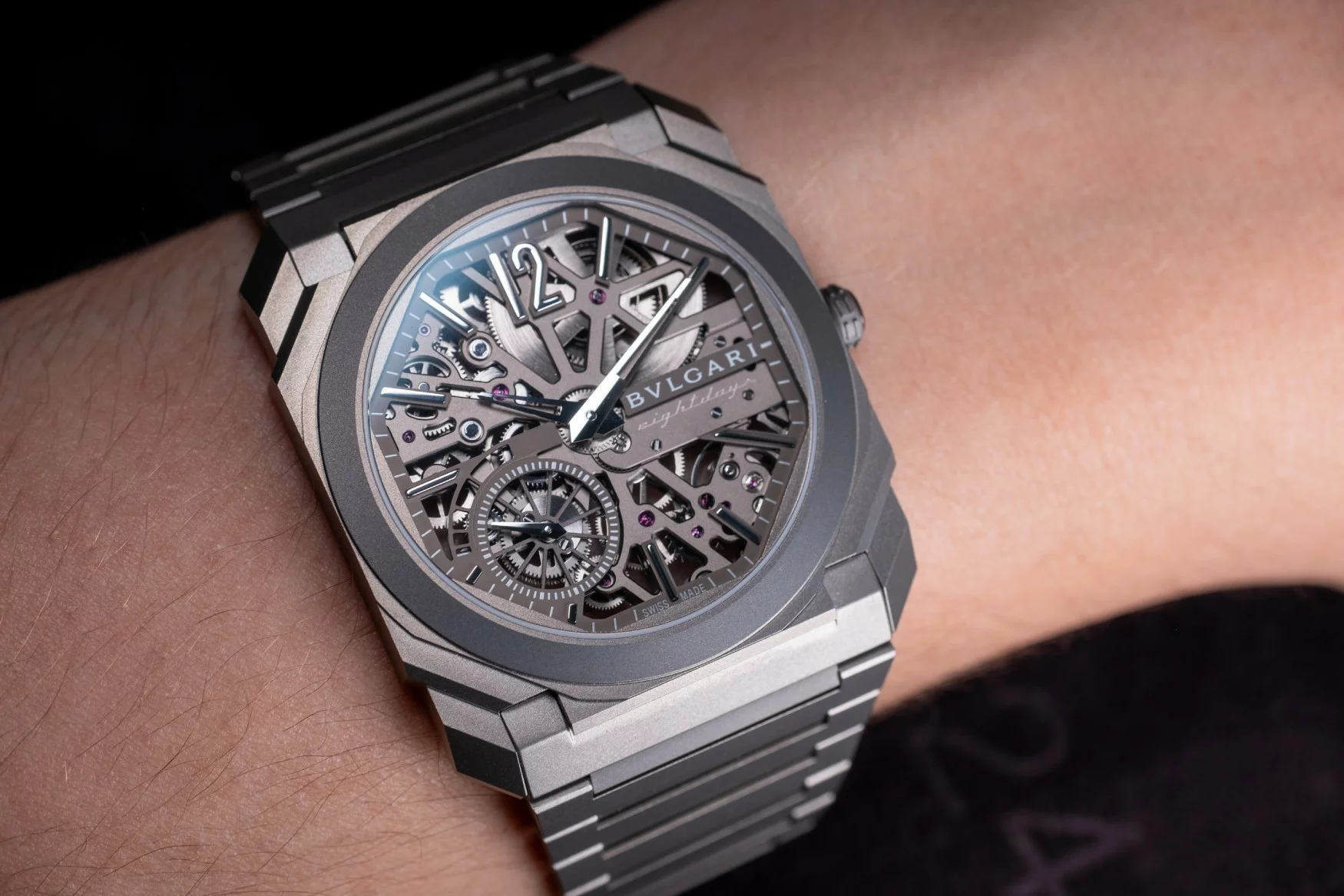
The Octo Finissimo Skeleton 8 Days pushes the category in an ultra-thin and long-power-reserve direction. Bulgari specifies a manufacture movement only 2.50 mm thick, manual winding, an eight-day power reserve, and water resistance to 30 meters, all housed in a black DLC-coated titanium case with an openworked dial. That combination is unusual in skeleton watches, where dramatic visibility often comes at the expense of autonomy or thinness. Here, both are central to the identity of the piece.
8. Girard-Perregaux Laureato Skeleton

Girard-Perregaux uses the Laureato Skeleton to bring openworked watchmaking into the integrated-bracelet sports category without losing movement seriousness. The official 42 mm steel reference uses the self-winding GP01800 caliber, running at 4 Hz with 173 parts and 25 jewels. The movement is open enough to show its structure clearly, but still framed within the octagonal Laureato architecture, which keeps the watch visually disciplined rather than overly theatrical.
9. Oris ProPilot X Caliber 115
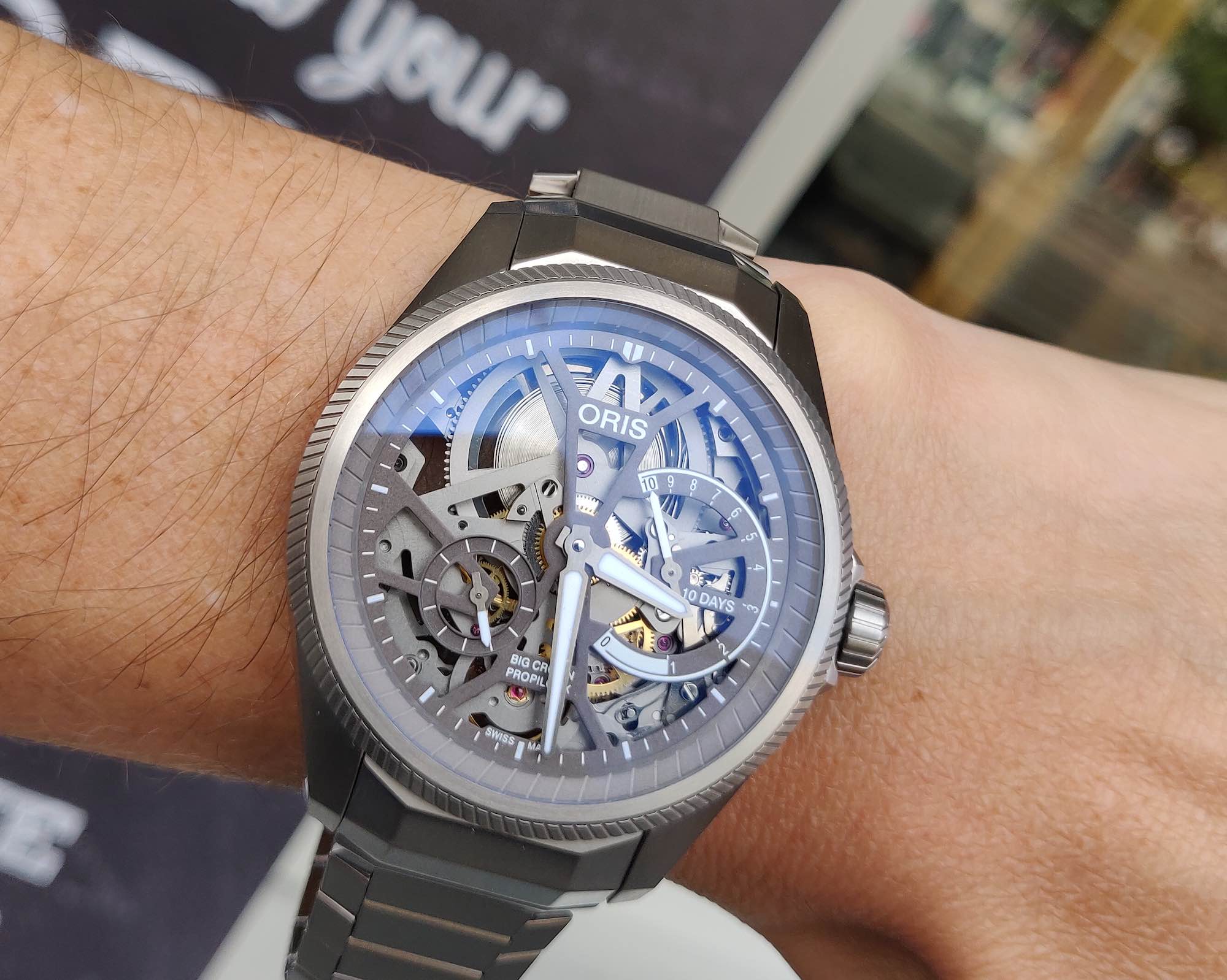
Oris takes a more industrial and movement-first approach. The ProPilot X Caliber 115 uses a skeletonised in-house hand-wound caliber with a 10-day power reserve and the brand’s patented non-linear power reserve indicator, a feature designed to show remaining energy more precisely as the watch approaches the need for rewinding. In the ProPilot X case, Oris places that movement inside a 44 mm titanium architecture that emphasizes function, scale, and legibility rather than decorative fragility.
10. Bell & Ross BR-03 Skeleton Black Ceramic

Bell & Ross applies skeletonisation to its cockpit-instrument design language through the BR-03 Skeleton Black Ceramic. The brand specifies a 41 mm microblasted black ceramic case, 10.60 mm thickness, automatic mechanical caliber BR-CAL.328, and a 54-hour power reserve. Rather than chasing classical openworked finishing, Bell & Ross focuses on modern readability and instrument-style structure, which gives this watch a distinctly different position in the skeleton category.
Precision made visible through structure, finishing, and control
A skeleton watch succeeds only when openness does not weaken the movement. Once metal is removed, the remaining architecture must still manage torque, hold tolerances, and preserve stability over time. That is why the most respected skeleton watches are rarely the most chaotic ones. They are the ones in which every visible bridge and wheel appears deliberate, load-bearing, and mechanically justified.
Seen at its highest level, skeletonization is not decoration. It is proof of confidence in the movement itself. Brands that execute it well show not only what the caliber looks like, but how precisely it has been conceived, finished, and structured to remain reliable even when nothing is hidden. That is what gives the category its lasting authority in modern horology.

Patek Philippe Nautilus 5990/1A Tiffany and Co.
Patek Philippe Nautilus 5990/1A Tiffany and Co. Basic Info Brand...
Read More
Patek Philippe Savonnette For Sale
Patek Philippe Savonnette For Sale Basic Info Brand Patek Philippe...
Read More
Buy Patek Philippe Aquanaut 5168G Online
Buy Patek Philippe Aquanaut 5168G Online Basic Info Brand Patek...
Read More
Patek Philippe Grandmaster Chime 6300G
Patek Philippe Grandmaster Chime 6300G A white gold grand complication...
Read More
Rolex Yacht-Master 126655
Rolex Yacht Master 126655 A bold modern Rolex crafted with...
Read More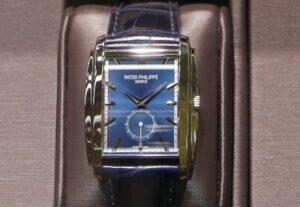
Patek Philippe Gondolo 5124R
Patek Philippe Gondolo 5124R-001 A rose gold Gondolo where architectural...
Read More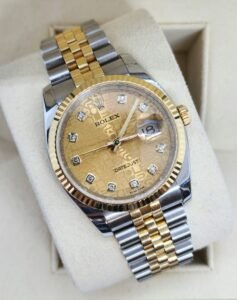
Rolex Datejust 116233
Rolex Datejust 116233 Rich champagne tones and yellow gold detailing...
Read More
Patek Philippe Celebrates 50 Years of the Nautilus With Four Limited Edition Watches
Fifty years is a long time for anything to remain...
Read More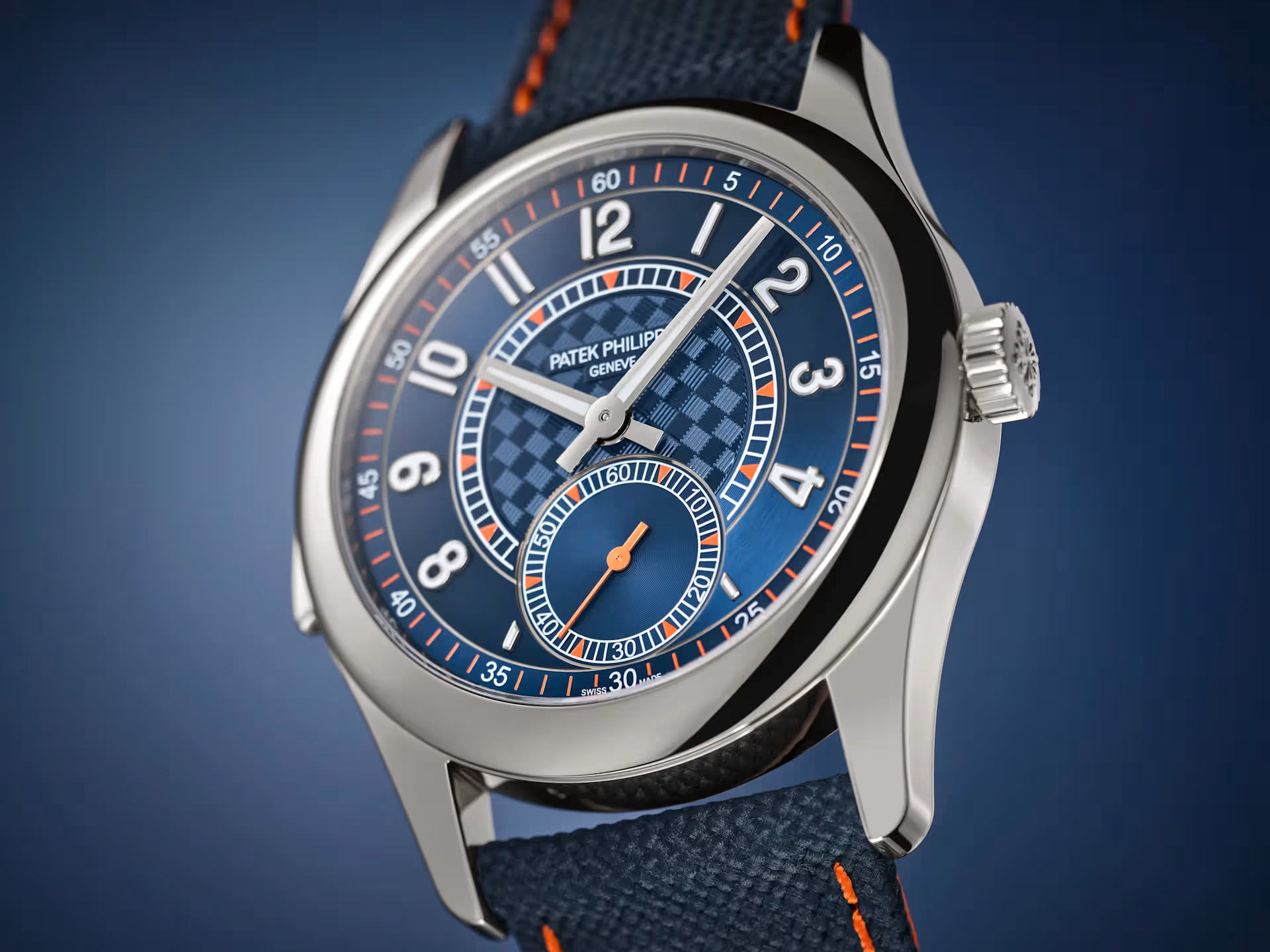
Patek Philippe 7047G Minute Repeater Grand Complications
The minute repeater is one of the great watchmaking efforts...
Read More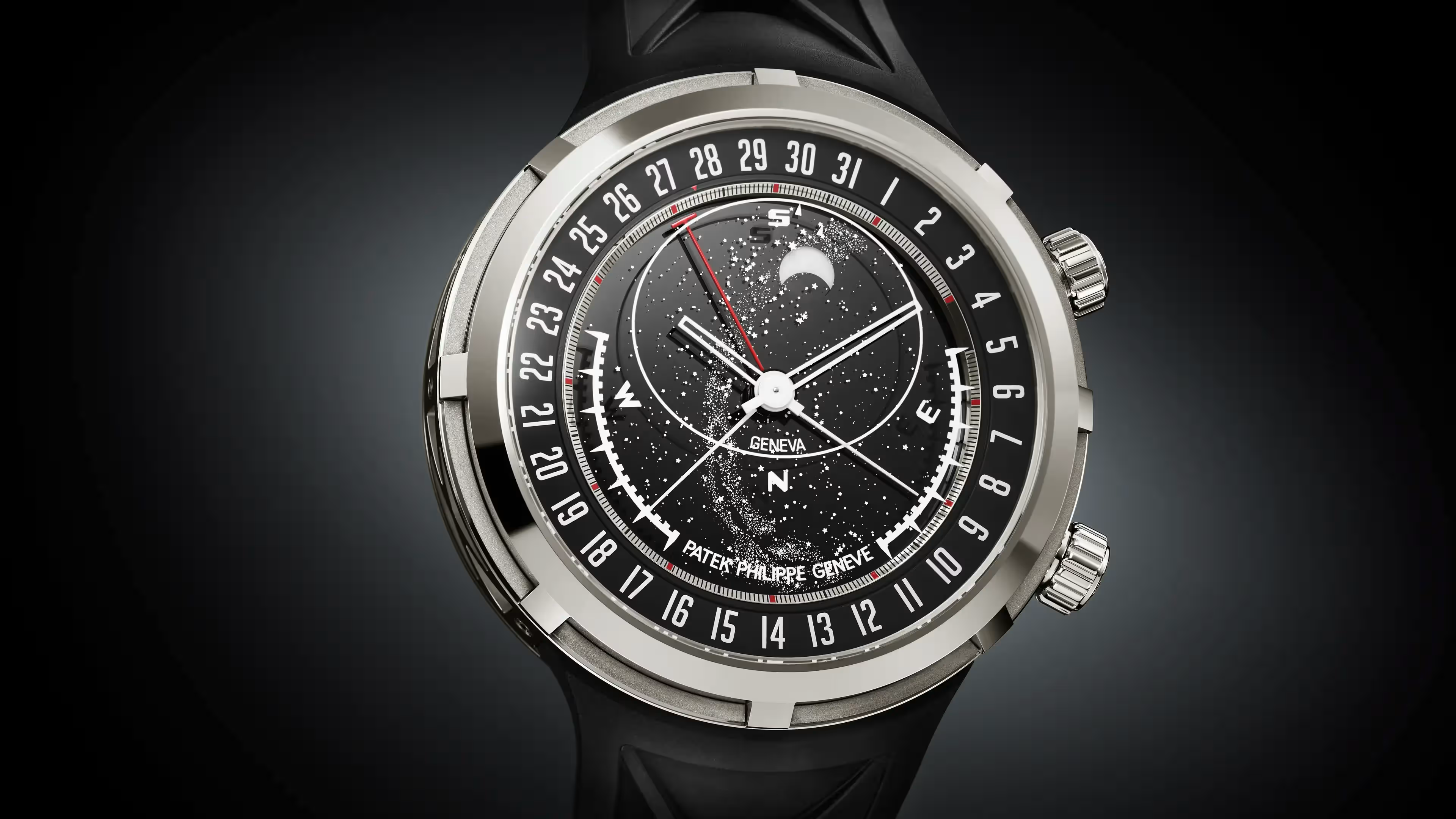
Patek Philippe 6105G Celestial Sunrise And Sunset Complication
At Watches & Wonders 2026, the brand introduced the new...
Read More
Patek Philippe Cubitus 5840P Perpetual Calendar Platinum
What else could explain the shutter shades on the latest...
Read More