
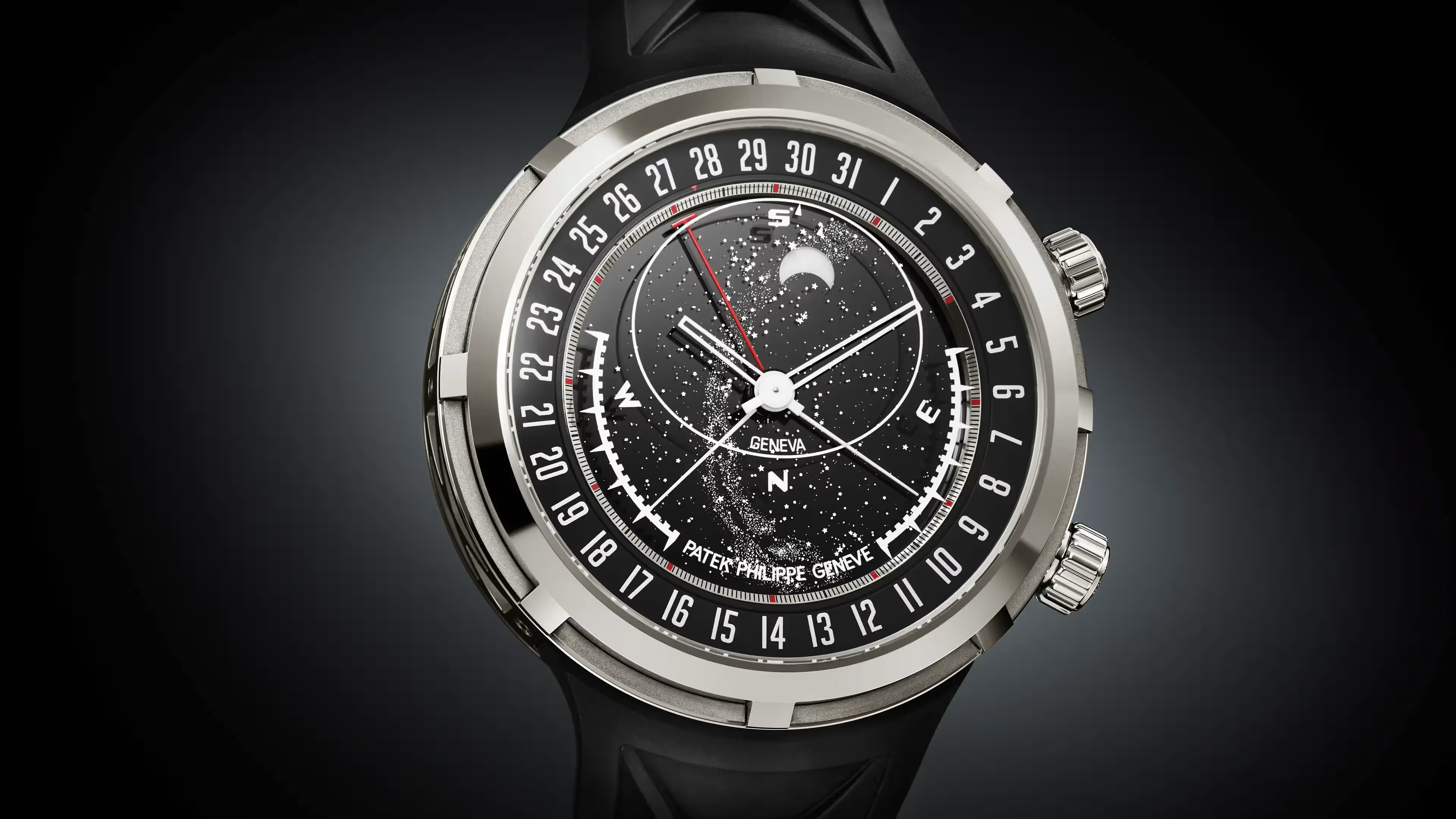
At Watches & Wonders 2026, the brand introduced the new Patek Philippe Celestial Sunrise and Sunset Ref. 6105G-001 watch, a larger, more contemporary take on its Celestial astronomical pieces. We went hands-on with the watch to see how this fresh direction actually wears and whether it works in practice.
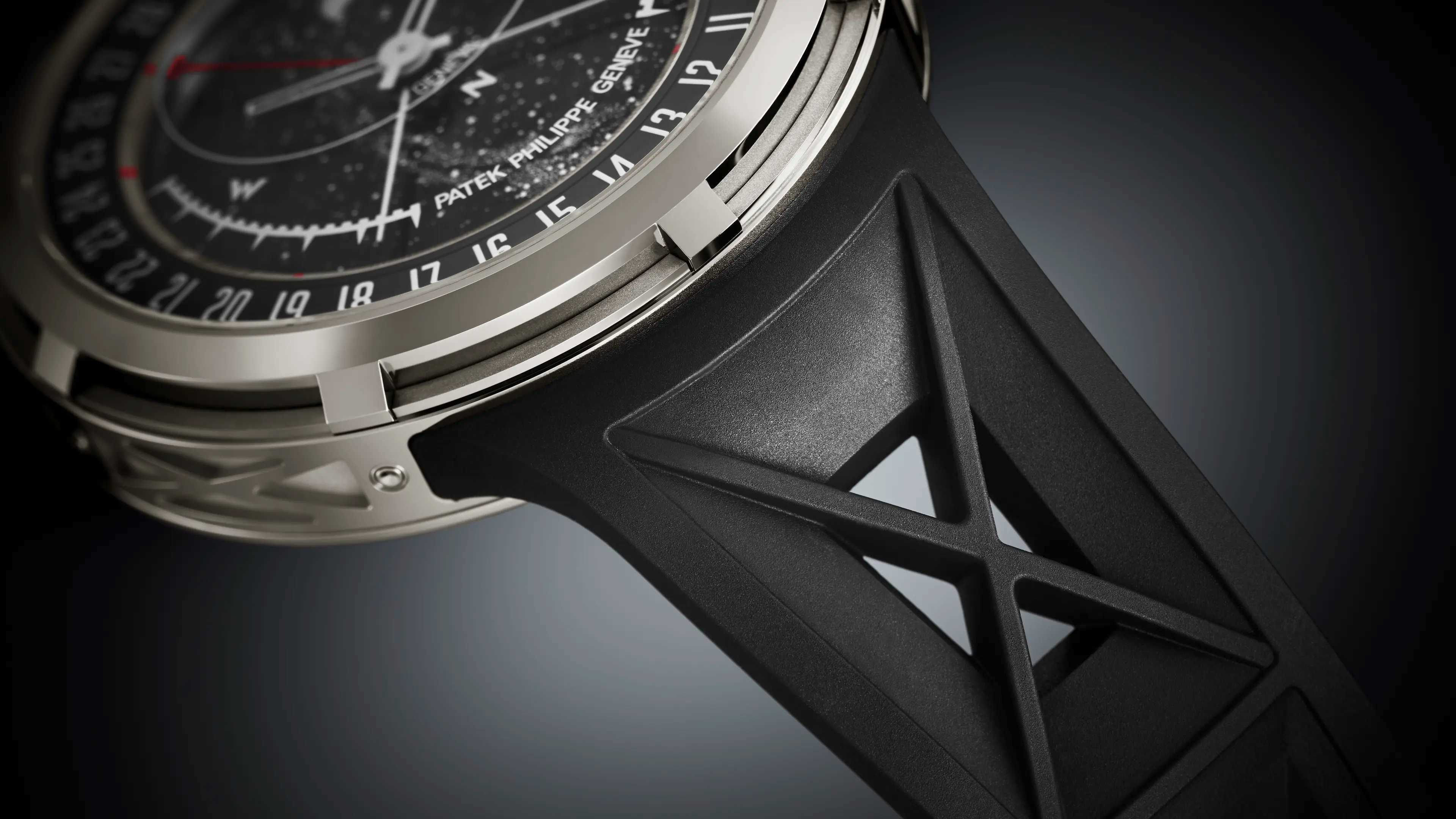
Replacing the recently discontinued Ref. 6102, the new Celestial Ref. 6105G-001 adds a sunrise and sunset display to an already complex astronomical layout, all while pairing it with a 47mm white gold, lugless case and an integrated rubber strap. It also introduces a distinctive cross-hatched pattern across the caseband and caseback, inspired by the structural framework of space modules. This feels a bit out of left field for Patek. Then again, we are in something of a modern space race, with a handful of billionaires the type who can actually afford such a piece — competing to plant their corporate flags in orbit, so why not?
As seen here on Jake’s 6.6-inch wrist, the 6105G is surprisingly manageable given its 47mm diameter. The lug-less case and integrated strap help here. With no traditional lugs extending beyond the case, the watch essentially wears at its stated size, rather than larger. It’s still undoubtedly a big watch, and not something that’s going to slip under a cuff at 12.39mm thick, but it sits more comfortably than you might expect. Paired with the integrated rubber strap, which conforms well to the wrist, the overall experience is less cumbersome than the dimensions would suggest. The notched bezel reminds me of the one found on another “Holy Trinity” model; I’m sure you know the one.
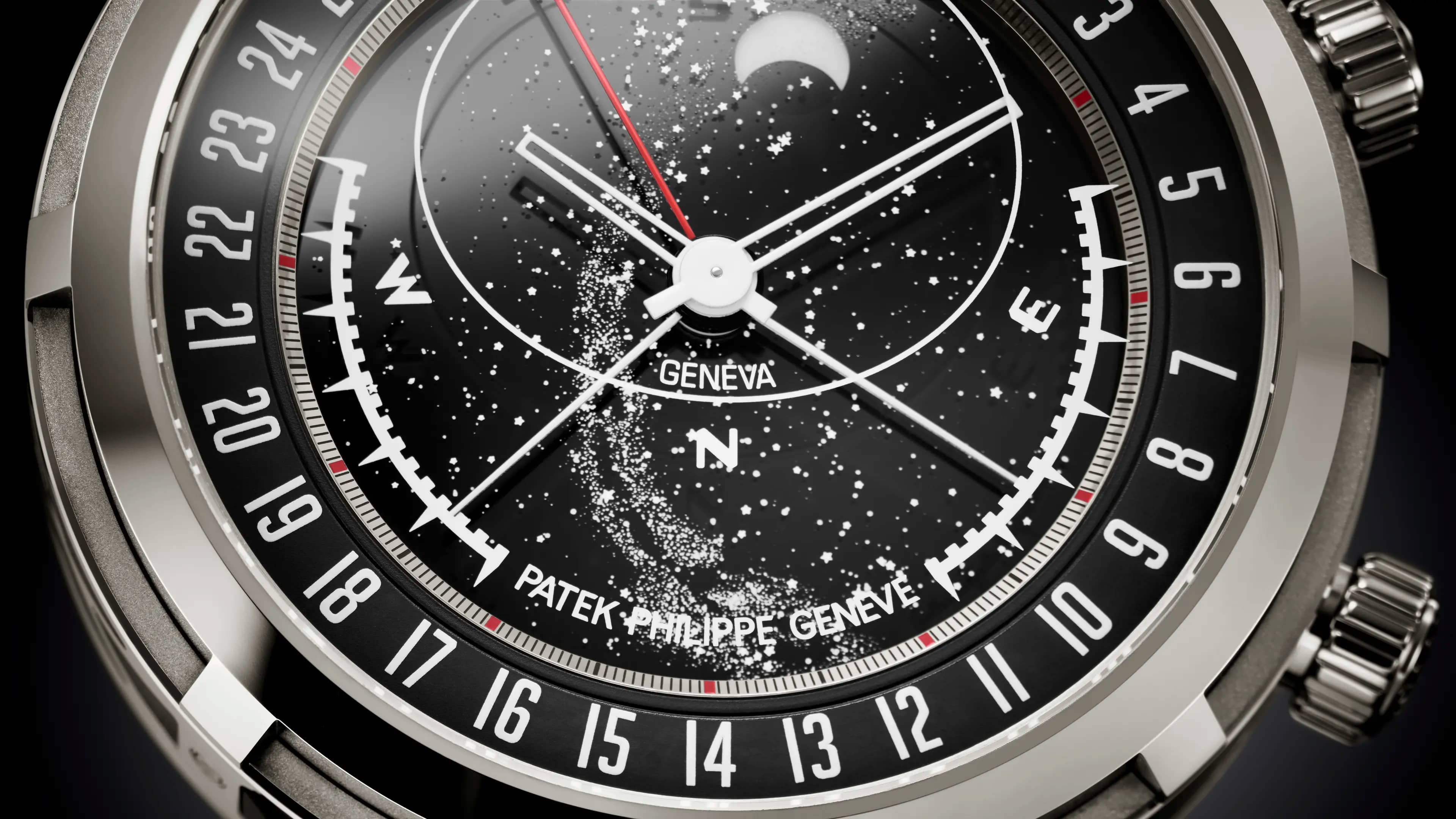
The dial is where things get complicated. At a glance, it looks like a dense mix of overlapping information, but once you start breaking it down, it’s actually quite methodical. At its core is the familiar Celestial display, showing the night sky as it appears from Geneva (or from any other city on the same latitude in the northern hemisphere), complete with the movement of the stars, the position of the moon, and its phases, all layered across multiple rotating discs.
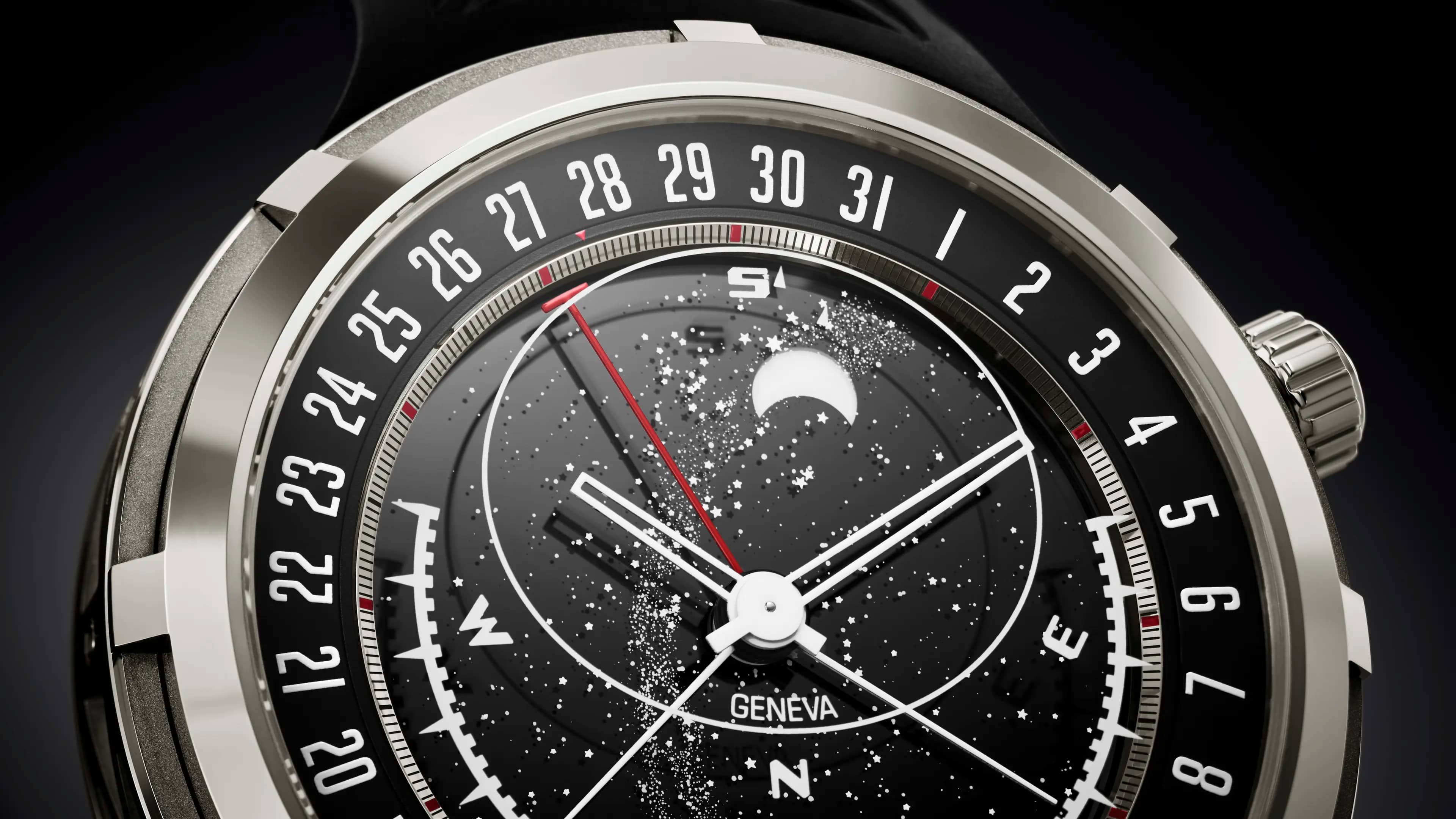
Around the edge of the dial is where Patek gets clever. The peripheral scale isn’t just for the date, indicated by a red hammer-style hand — it also doubles as the display for sunrise and sunset. Those are shown via two separate hands, with sunrise on the right and sunset on the left, which explains why the “1” on the date scale is not positioned at 12 o’clock as you might expect; everything is shifted to keep the two scales balanced across the dial.
The sky chart itself is displayed on a transparent sapphire disk decorated with stars, while the Milky Way is printed underneath to add depth. An ellipse printed on the underside of the sapphire crystal marks the portion of the sky visible from Geneva, so as the display rotates, what you’re seeing is effectively a real-time snapshot of the night sky from that latitude. It’s not the most practical display in the traditional sense, but that’s also not the point of any astronomical watch. It’s visually engaging, mechanically impressive, and unapologetically poetic.
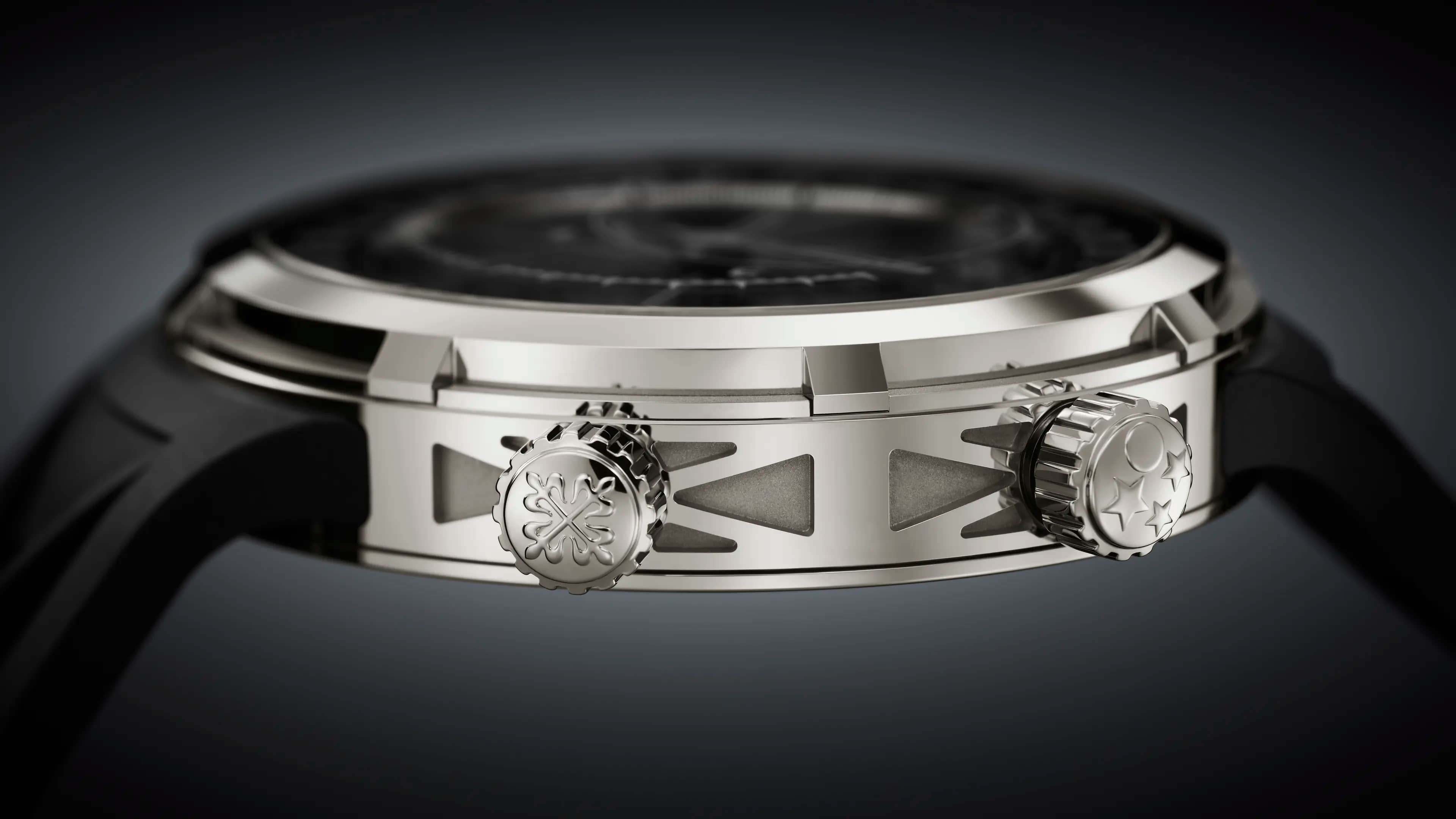
One of the more significant additions here is Patek Philippe’s patented system for handling the changeover between Summer Time and Winter Time, which is something that’s usually a headache on watches with sunrise and sunset displays. Here, two correctors set into the caseband at 9 and 10 o’clock allow you to move the time forward or back by one hour, while keeping the sunrise and sunset indications in sync. There’s also the two-crown setup. The crown at 4 o’clock handles winding and time-setting, while the second crown at 2 o’clock is dedicated to the astronomical functions.
Powering the 6105G is the new Caliber 240 C LU CL LCSO, an evolution of Patek Philippe’s favorite ultra-thin 240 base. Even with the added sunrise and sunset mechanism (along with everything else already going on here), the movement remains relatively compact, coming in at 7.93mm thick. It runs at 3 Hz and offers a power reserve of 38 to 48 hours, with the signature off-center 22K gold micro-rotor handling winding duties.
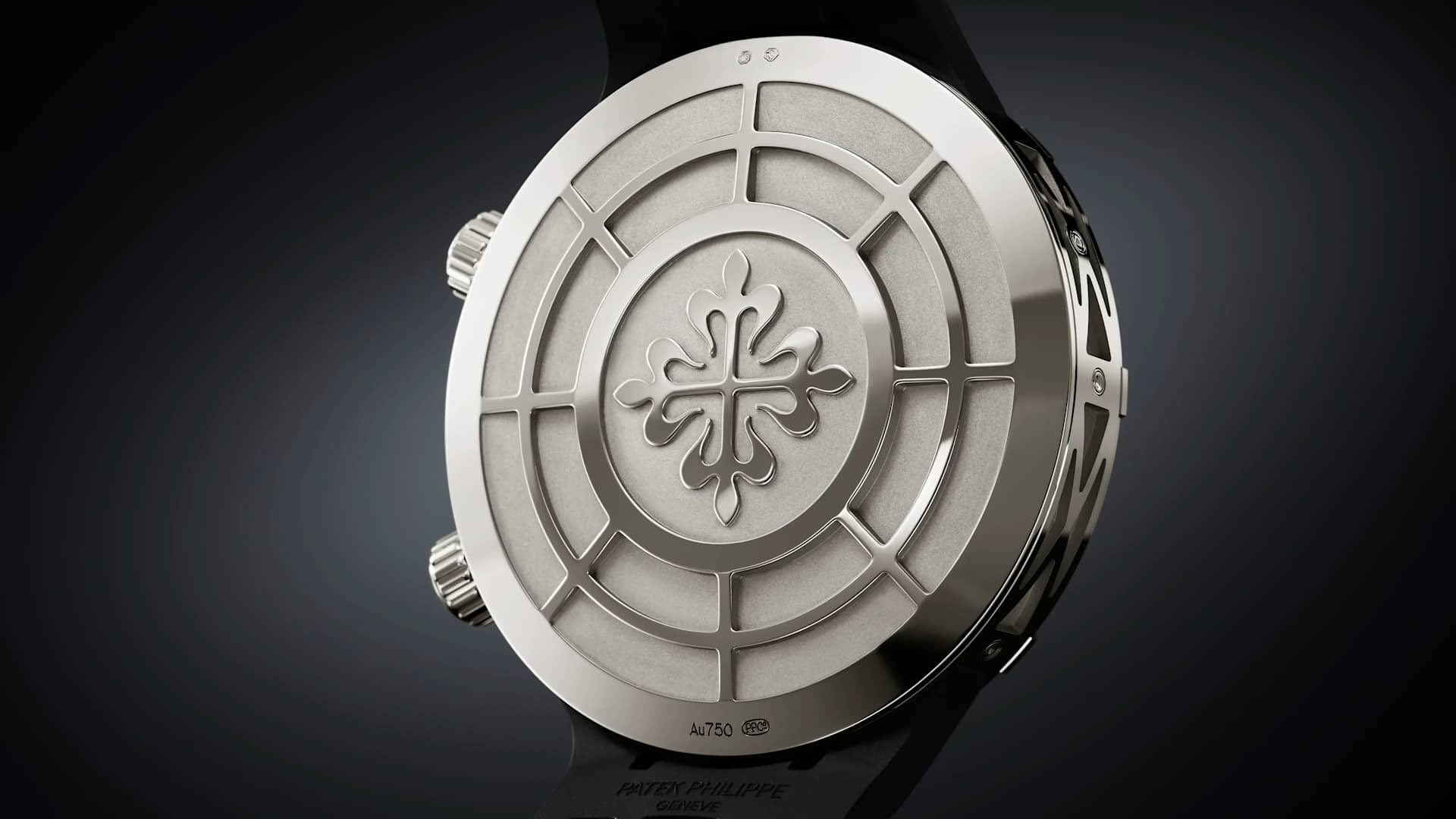
Given the complexity, the decision to go with a solid caseback instead of a display one may seem unusual, but it makes sense once you consider the proportions. The movement itself measures 38mm across thanks to the additional modules stacked on top of Caliber 240, while the case comes in at a full 47mm. That’s a significant gap, and a display back would likely have emphasized just how much smaller the movement is relative to the case. Instead, Patek carries the X-shaped motif from the caseband onto the back, finishing it with a Calatrava cross at the center. As Jake pointed out, the look is not dissimilar to the medallion-style paperweights that were previously delivered with some big-box Speedmasters, but an open caseback would have awkwardly dwarfed the movement.
The 6105G is an unusual mix for Patek — equal parts traditional astronomical complication and modern design experiment. It’s not going to be for everyone, but no Patek ever is. And this is not a watch that’s going to serve as anyone’s first, second, or even third; it’s the kind of piece that joins an already expansive collection, aimed at the collector who already has everything else. Plus, the watch isn’t the only thing that’s astronomical here; the Celestial Sunrise and Sunset Ref. 6105G-001 will retail for $437,610 USD, putting it well beyond the reach of most Earth-dwelling mortals. For more information, please visit the Patek Philippe website.